



Last Updated on May 20, 2026
Parenting through health challenges is exhausting and unpredictable, but you don’t have to figure it out alone. Here you’ll find practical help, encouragement, and faith-filled guidance for the hard days.
Parenting is a blessing, but some days it can stretch you thin. When you’re parenting through health challenges like chronic pain, fatigue, anxiety, depression, migraines, autoimmune flare-ups, or a new diagnosis, the whole day can feel heavier than it should.
But on your hardest days, you’re still a faithful parent just by showing up, even when your capacity looks different from what you’re used to.

When Parenting Through Health Challenges Affects Your Days
You might be parenting with a clearly named health condition, or you might just feel off and not know why. Either way, the shift can be disorienting.
The routines that used to feel normal might feel harder, the noises louder and the messes bigger. Your reactions to all of these changes might even surprise you.
Here’s a small truth to hold on to: God is not shocked by your limits.
Psalm 46:1 says God is “a very present help in trouble.” He’s not waiting for you to get it together first. He’s present in the middle of the day when you’re trying to make lunch and your head is pounding, or your chest is tight and your energy drops like a phone battery on a busy day.
So, give this season a name without shame. You can acknowledge that you’re parenting through illness, recovery, grief or mental health struggles. That honesty is essential because it’s often the first step toward peace.
Read this next: 37 Powerful Bible Verses About Leaning on God for Help
When Mental Health Affects Your Parenting
Mental health and parenting are connected in a way that feels almost too obvious once you say it out loud. When your mind is overwhelmed, your parenting can feel like it’s happening through fog.
Anxiety may keep your body on alert, and when you feel depressed, everything takes more effort.
A Simple Daily Check-In
This is where a gentle check-in can help. Some parents use a parenting stress scale as a simple self-check-in.
Try asking yourself once a day:
- What’s raising my stress right now?
- What’s draining me?
- What’s one thing that’s helping, even a little?
Jot it down somewhere so you can pick up the pattern thread. When you see the pattern, you can plan around it. You can also reduce the friction and stop blaming yourself for something that has a real reason behind it.
Small, Realistic Ways to Support Your Mental Health
If your schedule is packed and you feel like you have no room for mental health practices, there are a few things that can fit into a busy life to help you find a rhythm that feels realistic.
1. Even a few minutes of sunlight can be beneficial. While vitamin D supports calcium absorption in the gut and bone growth, research also shows that 5-15 minutes of sun three times a week is generally enough to help combat anxiety and depression through its serotonin-promoting properties.
2. Also, ask God for wisdom. James 1:5 says if you lack wisdom, you can ask God and He gives generously.
Wisdom can look like calling your doctor, adjusting your expectations or saying no to one more commitment, even if you feel guilty at first.
Start With Compassion
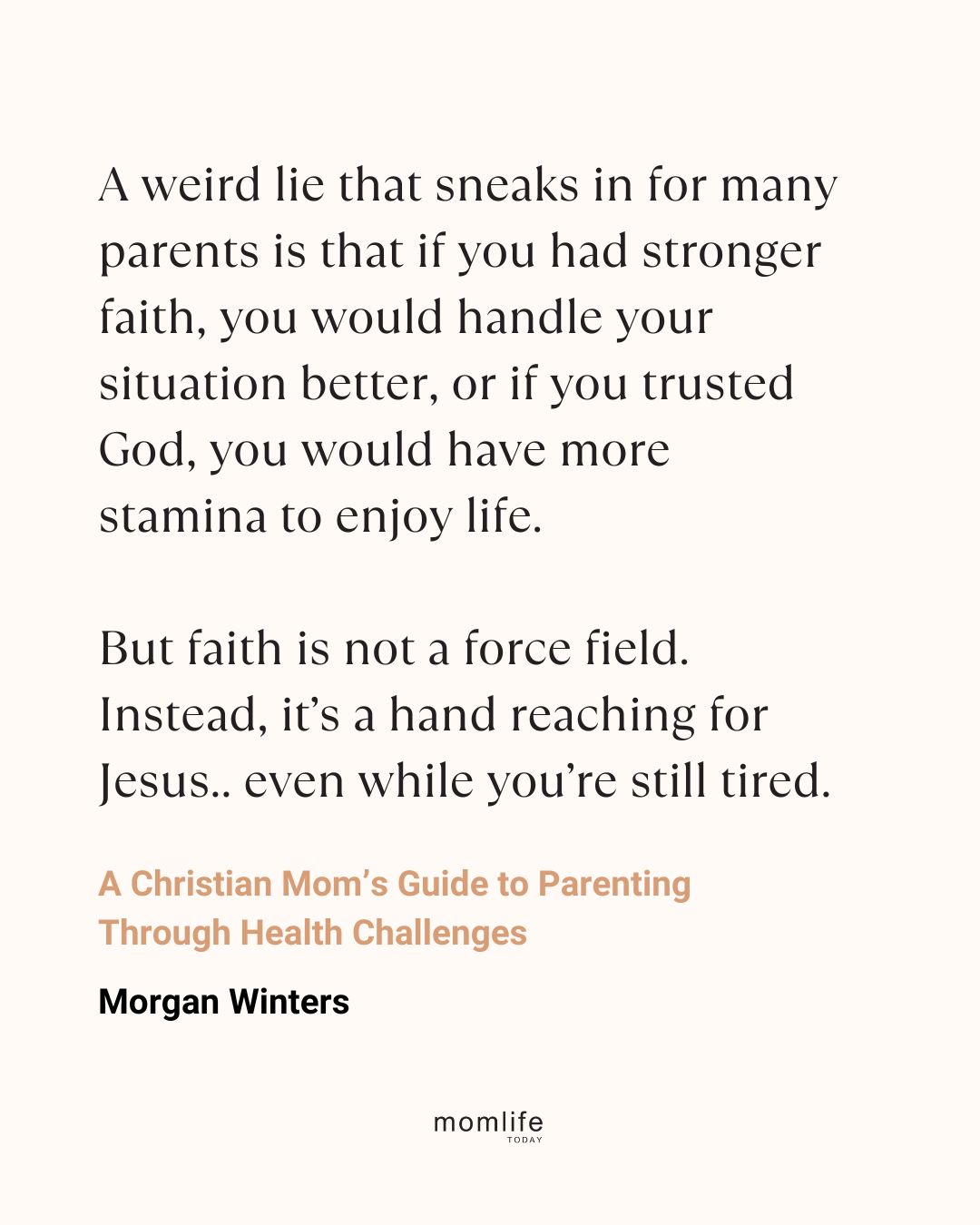
A weird lie that sneaks in for many parents is that if you had stronger faith, you would handle your situation better, or if you trusted God, you would have more stamina to enjoy life.
But faith is not a force field. Instead, it’s a hand reaching for Jesus while you’re still tired.
Matthew 11:28-30 has been a lifeline for me in hard seasons. Jesus invites the weary to come to Him. His yoke is easy and His burden is light. That does not mean your life comes easy. It just means you don’t have to carry the load alone. You’re allowed to build your week around gentleness.
Start by choosing a couple of anchors for the week. Think in terms of non-negotiables — two or three things that help you function and help your home stay steady.
Maybe that looks like:
- Taking your medication on time
- Eating regular meals, even if they are basic
- A consistent bedtime routine for the kids
- Ten minutes of quiet prayer in the morning
- A short walk or stretch that helps your body feel less stuck
Build a Plan
Finally, build a small plan that respects your limits, and you can repeat week after week. Then, create a low-energy to-do list, or parenting menu, for the days when your capacity dips. This is one of those things that sounds almost too simple, but lists can significantly reduce the risk of decision fatigue altogether.
Your plan might include:
- Floor time with a puzzle or blocks
- Audiobooks or read-alouds while you rest your body
- Coloring pages and stickers at the table
- A movie afternoon with snacks and blankets
- Easy outside time on the porch with some bubbles
And yes, screen time can live here without shame. You’re not failing parenting. Instead, you’re adapting and choosing what keeps everyone, including yourself, okay.
A Closing Blessing
If you are parenting with health challenges, God sees you. He sees the courage of making breakfast when you feel worn down and the humility of trying again after a hard moment.
Isaiah 40:31 reminds you that hope in the Lord brings renewed strength. Sometimes that renewal looks like energy and sometimes it looks like steady endurance. Either way, you’re not alone.